








 There are some people whose bones are extremely strong and who have never suffered a fracture-related injury in their lifetime. Unfortunately, these people are few and far between.
How to recognise a fracture?
If you have fallen or suffered some other type of injury and have sharp, excruciating pain, difficulty or impossibility to move the affected area, severe swelling, bruising and discolouration, it is likely to be a fracture. It is very important to note that if it is not clear whether an injury is a fracture, we recommend that you treat it as a fracture and handle the injured part of the body with care. Otherwise, you may damage the injured area even more.
How do I treat a fractured arm, leg or other body part?
The first thing to realise is that you cannot repair fractures or dislocations yourself. Only experienced doctors should do this. If you do the opposite, you could face very unpleasant consequences.
In the event of a fracture, we recommend that you go to a medical facility with the fracture immobilised to prevent dislocation of the fractures.
Complications
Complications are more common in open fractures. If the fracture site is not properly reinforced, the bones do not grow properly and the limb becomes painful and non-functional. In the case of pseudoarthrosis (false joint or joint 'out of place'), the bone does not heal at all, resulting in abnormal flexibility, pain and deformity of the limb. Possible wound infections and infections are also complications of fractures.
Treatment of fractures
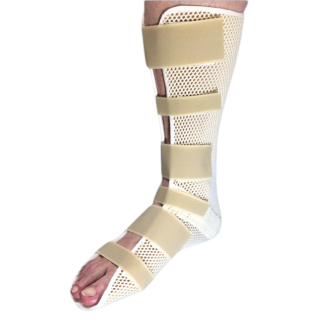
X-rays are taken on arrival at the hospital to try to find out exactly how and where the bone broke. The fracture site is then properly immobilised and secured with a plaster cast or a custom-made splint. If the fracture is serious, an operation is performed to fix the broken bone with additional devices such as nails or a plate.
Prevention of fractures
Injuries usually happen unexpectedly, so it is not always possible to prevent them. However, it is possible to strengthen bones, reduce bone thinning (osteoporosis) and the likelihood of fractures by eating a diet high in calcium (dairy products, meat, fish, fruit, vegetables) and avoiding calcium-depleting foods such as caffeine, alcohol and sugar products. Bones are strengthened by adequate exercise, so you should make time for daily walks and exercise. Proper footwear can help prevent injuries in winter. Orthopaedic shops sell spiked soles specially designed for slippery surfaces.